
A winding mountain trail above a forested valley in the first light of dawn

THE ADVENTURE PROJECT

A BOOK. A PODCAST. A LIFE IN PROGRESS.

Your life.
Your adventure.

For the part of you that knows there’s more to life than going through the motions.

Explore the project
The Adventure Project emblem: a North Star above a sunrise and an open road
All Rights Reserved Seven13 Enterprises, LLCPAY ATTENTION. CHOOSE YOUR DIRECTION.

THE ADVENTURE STARTS HERE

You are
the project.

A meaningful life is built in the decisions we make, the relationships we tend, and the things we choose to keep showing up for.

The Adventure Project brings those choices into focus through stories and honest conversations. Some will feel familiar. Others might challenge you. The point is to notice what they reveal about your own life—and decide what to do with it.

THE BOOKTHE PODCASTTHE PRACTICE
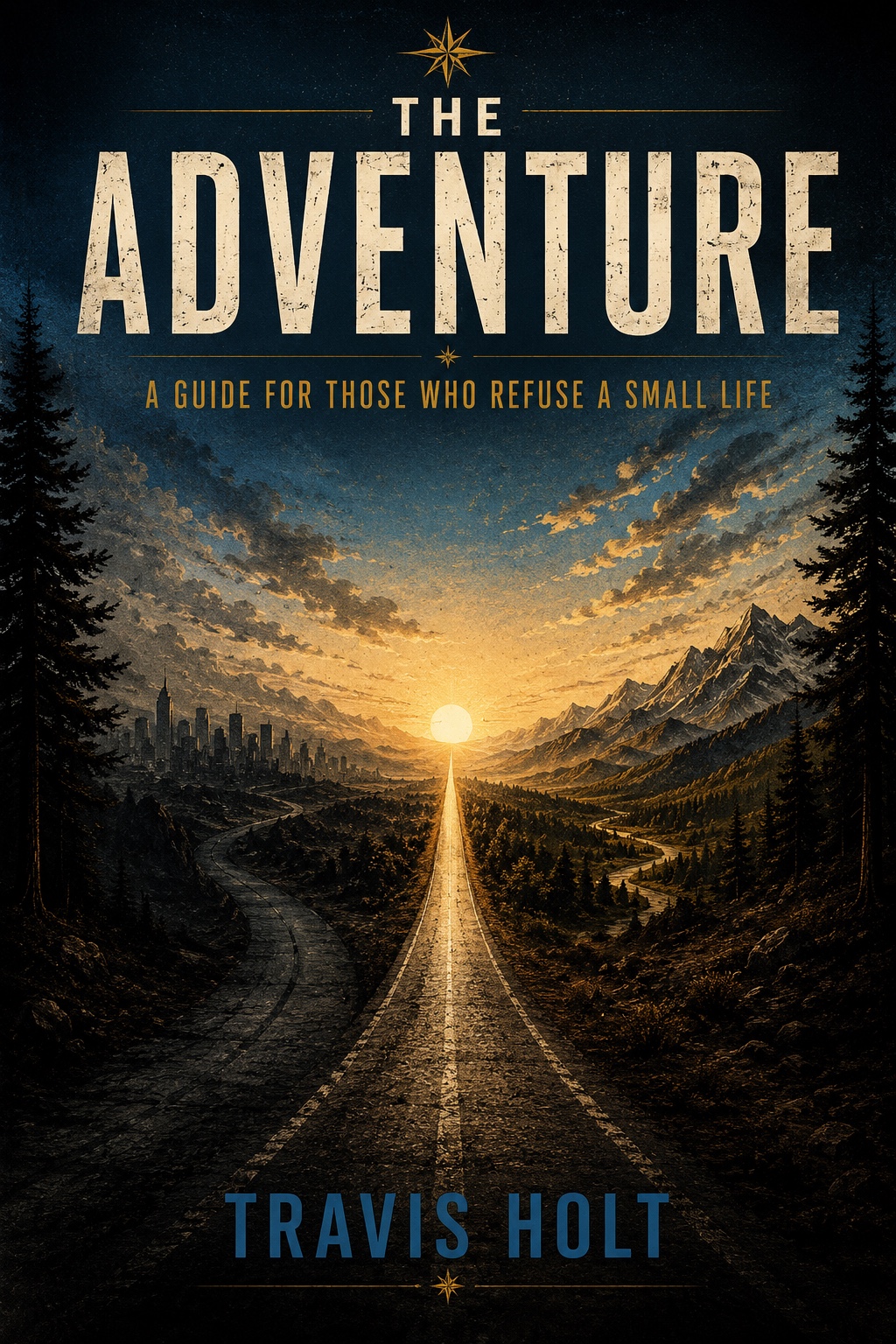
The Adventure by Travis Holt — A Guide for Those Who Refuse a Small Life. A golden road leads toward the sunset between blue mountains.

STORIES TO HELP YOU SEE YOUR OWN

The Adventure

Book coming soon

What does it mean to live fully?

A collection of stories, failures, victories, and reminders from a life still being figured out. The Adventure explores self-acceptance, ownership, commitment, and the quiet drift that can take us somewhere we never meant to go.

Read it with your own life in mind. Keep what helps. Question what doesn’t.

Read the prologue

PROLOGUE

When I was eighteen years old, about three weeks away from graduating high school, my dad died.

It wasn’t entirely unexpected. He had lived with a heart condition his whole life. We knew it was possible. But knowing something can happen and believing you are about to live through it are very different things.

He was thirty-seven years old. Younger than I am now.

My parents had been divorced for years. Things between them had improved, but they were still complicated. My dad lived close to the edge of financial trouble, relationship trouble, and sometimes legal trouble. He and I had been estranged for years too. We had only recently started rebuilding our relationship.

That word—rebuilding—holds a lot for me. It means something had been damaged. It also means we were trying. When he died, we were still in the middle of that effort.

He wasn’t perfect. I loved him, and there were things between us that love hadn’t settled. Then he was gone, and the things that had occupied so much space while he was alive seemed to change size.

The arguments. The frustrations. The disappointments. The scorecards we keep with people we expect to see again.

I don’t mean that his death made every mistake harmless or every difficult memory disappear. There would simply be no next conversation in which we finally understood each other a little better. No ordinary afternoon that gave us another chance.

What remained was the space his life occupied in the people who loved him. His children. His parents. His brothers and sisters. My mom.

A person could leave a complicated life and still leave an enormous absence.

I have spent years thinking about that. How can something that feels so important today become so small tomorrow? How much energy do we spend defending a position we would gladly surrender for one more conversation?

Those questions did not make me instantly wise. I went on to pursue titles, money, approval, and plenty of things that looked more like arrival than they felt. I knew life was short. Apparently, I still needed to find out how easily I could spend it distracted.

That is part of why I am writing this book.

I have built things I once only imagined. I have also stood inside the life I worked for and wondered why I felt so far from myself. I have confused being admired with being at peace. I have made choices I am proud of and others I understand more clearly now than I did while defending them.

Underneath all of that is a question I haven’t finished answering:

What does it mean to live fully?

I’ve often heard that death is humanity’s greatest fear. I can’t answer for humanity. When I think about my own fear, though, much of it concerns the life before death. The conversation I keep postponing. The thing I want to try but keep explaining away. The people beside me whom I assume will still be there when I finally slow down.

I’ve always loved stories about the hero’s journey. King Arthur. Luke Skywalker. Superman becoming Superman. Someone faces a responsibility before feeling ready to carry it. There is a call, a hesitation, and eventually a choice.

Will you answer?

Losing my dad may have been the first time life asked me that question in a way I couldn’t ignore. His death didn’t make me fearless. It didn’t give me a formula for what came next. It made me aware that the clock was running, even while I was busy deciding how to live.

I am still deciding. I have a wife and children now, work I care about, and questions that don’t become easier just because I can write a good sentence about them. Some days, the adventure is taking a risk. Other days, it is paying attention to the life I already have.

This book holds stories, failures, victories, observations, and reminders gathered along that road. I offer them because another person’s experience can help us recognize something in our own. You may find parts that fit. You may disagree with others. I hope both lead you somewhere useful.

I don’t have a roadmap. I have a growing conviction that a meaningful life is built through decisions we are willing to own, relationships we continue to tend, and the courage to change when we discover we have been heading somewhere we no longer want to go.

I would like to keep learning how to do that. I would like you to come along.

When the day comes for us to cross the great divide, I hope we recognize the lives we lived as our own. I hope the people we loved knew it while we were here.

There is a poem often attributed to Tecumseh, the Shawnee leader, that gives words to something I have carried since my dad died. Its closing image stays with me: singing a death song like a hero going home.

I don’t read that as a demand to become impressive before we die. I read it as an invitation to participate while we are alive.

"Live your life that the fear of death can never enter your heart.
Trouble no one about his religion.
Respect others in their views and demand that they respect yours.
Love your life, perfect your life, beautify all things in your life.
Seek to make your life long and of service to your people.
Prepare a noble death song, for the day when you go over the
great divide.
Always give a word or sign of salute, when meeting or passing a friend,
or even a stranger, if in a lonely place.
Show respect to all people, but grovel to none.
When you rise in the morning, give thanks for the light,
for your life, for your strength.
Give thanks for your food and for the joy of living.
If you see no reason to give thanks, the fault lies in yourself.
Abuse no one and no thing, for abuse turns the wise ones to fools
and robs the spirit of its vision.
When your time comes to die;
be not like those whose hearts are filled with fear of death;
so that when their time comes they weep and pray for a little more time, to live their lives over again in a different way.
Sing your death song, and die like a hero going home."
Read a chapter

8 The Comfortable Prison

GOOD TIMES

A friend once shared a saying with me:

“Hard times create strong men. Strong men create good times. Good times create weak men. Weak men create hard times.”

I understood why it stayed with people. It gives a messy subject a clean rhythm. Struggle produces strength, strength produces ease, and ease begins the cycle again.

I don’t think four sentences can explain history, or even a whole person. Hardship can leave people depleted. Stability can give them the room to learn and build. I have wanted good times for my family too much to pretend they are automatically bad for us.

What the saying made me examine was more specific: what happens to my attention when things seem to be going well?

It is easy to care about the budget when money is tight. Easy to recognize that a relationship needs attention when a difficult conversation makes the distance visible. When the immediate pressure eases, the habits that helped can begin to feel optional.

A little less attention here. Something postponed there. Nothing appears damaged enough to require action.

That is the part of comfort I distrust. I can begin treating a good situation as though it will maintain itself.

There is another version too. A situation becomes familiar, and familiarity starts doing the work of an answer. I know the routines. I know what is expected. I can explain why staying makes sense, even when I no longer feel fully present in the life I am protecting.

A comfortable prison does not have to be pleasant all the time. It only has to make leaving feel harder than continuing.

I know that tension from my own career. The familiar can hold security, affection, identity, and fear at once. Sorting those apart requires more honesty than simply telling myself to be brave.

Let’s Get Real

Comfort is one of the things we work for. We want a safe home, a reliable income, time to rest, and people with whom we can relax.

I don’t want a philosophy of growth that makes enjoying those things feel like failure.

The question is whether comfort restores my ability to participate in life or helps me avoid participating. An evening of rest may give me more to offer tomorrow. Repeated distraction may keep me from acknowledging what tomorrow keeps asking me to address.

The outward activity can look similar. Its place in the larger pattern matters.

The Resistance

The most persuasive reason to leave something alone is that nothing is obviously wrong.

The arrangement works well enough. The conversation can wait. I am tired. Other people live this way.

Sometimes leaving it alone is wise. We do not need to turn every season of contentment into a problem to solve. But when I keep defending an arrangement I privately resent, “fine” may be doing more work than it should.

The Law

What you stop sharpening can slowly dull.

Skills need practice. Relationships need attention. A life that once fit can need adjustment. None of that requires constant struggle or a larger goal every year.

Maintenance is meaningful work. So is rest. What matters is choosing them consciously instead of using their names to avoid a decision.

I want to be able to enjoy what I have built while staying awake to what it asks of me now.

Watch the Drift

Listen to the reasons you give for staying comfortable.

Are they connected to what you value, or mainly to what you fear? Would you make the same choice if you were beginning today? What is the smallest part you could reconsider without dismantling everything?

Those questions leave more room for judgment than the command to abandon your comfort zone. Some things deserve protection. Others deserve examination.

Why Comfort Quietly Weakens People

Comfort becomes costly when it makes avoidance easy to repeat.

The difficult conversation remains difficult. The skill remains unpracticed. The decision remains somewhere in the future. Meanwhile, we become increasingly accustomed to working around it.

A small life is never chosen. It’s slowly accepted.

I use that line as a reminder to notice my accommodations. It does not mean a quiet life is a small one. I may need more courage to protect an ordinary evening with my family than to pursue another impressive obligation.

THE SHIFT

Ask: “What is this comfort making possible, and what is it helping me postpone?”

  • Protect the rest that restores you.
  • Name one issue you keep working around.
  • Choose a manageable discomfort that would help address it.
  • Keep the habits that sustain what you value, even when the crisis has passed.

The point is to remain involved in the life you have. Enjoy the good times. Notice what keeps them good. And when familiar no longer means right, give yourself permission to examine the difference.

ANOTHER LIFE. ANOTHER STORY.

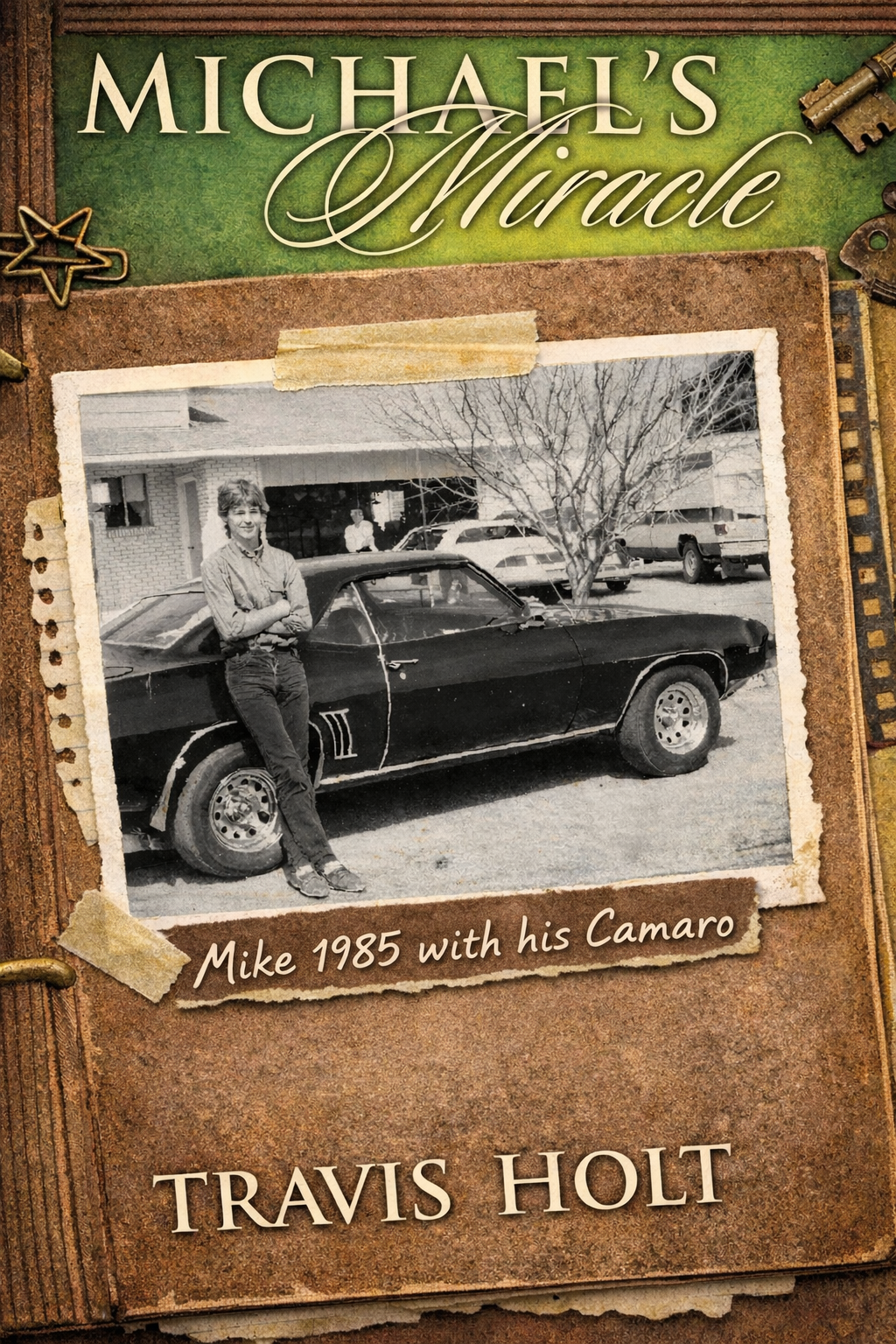
Michael’s Miracle

Book in development

A real life, with all that it holds.

Michael’s Miracle follows the life of my father, Mike—the experiences that shaped him, the choices he made, and the relationships that gave his life meaning.

As a son, and now a father myself, I’m returning to his story to understand the person behind the memories. His life holds hardship, hope, contradictions, and ordinary moments worth remembering.

While The Adventure asks us to look more closely at our own lives, Michael’s Miracle invites us into one life in depth. It is a story still being written, and part of the heart of The Adventure Project.

BY TRAVIS HOLT

Michael’s Miracle by Travis Holt. A scrapbook cover with a photograph captioned Mike 1985 with his Camaro.

TAKE SOMETHING WITH YOU

A place to begin.

You don’t have to change everything today.
Start by asking a better question.

01 / COURAGEWhere are you
checking the room?
Consider this

Think of a choice you already understand but keep waiting for someone else to approve. What do you believe before you look around?

Try this: write your answer before asking for another opinion.

02 / DRIFTWhat have you stopped
reinforcing?
Consider this

Choose a relationship, habit, or goal that once felt normal and now feels distant. Which small repetitions used to keep it alive?

Try this: restore one sustainable repetition if it still belongs in your life.

03 / DIRECTIONWho are you becoming
while you pursue it?
Consider this

Look at something you’re working toward. How is the pursuit shaping your days, your relationships, and the way you treat yourself?

Try this: name one way to pursue it that you can respect today.

THE CONVERSATION CONTINUES

Practice what
you preach.

The Adventure Project podcast

Writing about a meaningful life is one thing. Practicing it is the ongoing work. The podcast will bring that work into the open: commitments, setbacks, lessons, and the ordinary choices that shape who we become.

Podcast coming soon
THE FIRST CONVERSATION✦

IN DEVELOPMENT

Practice what
you preach.

What happens when the person writing about taking ownership starts holding himself to the same standard?

WITH TRAVIS HOLTEPISODE 01

THE PERSON BEHIND THE PROJECT

Still learning.
Still choosing.

Travis HoltAUTHOR & PODCAST CREATOR

I was born and raised in Utah, and for most of my life I’ve had a hard time following a perfectly straight line.

At fifteen, I moved to the Bear Lake Valley to live with my uncle and his family. I worked at their café in Paris, Idaho, and helped him build the home they would eventually live in. Looking back, that period shaped more of me than I understood at the time. There is something about building a house with your own hands, and then watching a family live inside it, that teaches you the difference between simply wanting something and actually creating it.

The café taught me something different. It taught me how to work under pressure, how to serve people, how to solve problems quickly, and how much the smallest details matter.

Those lessons followed me home.

A few years later, just weeks before my high school graduation, my dad died. I was eighteen years old.

Because I was his next of kin, I suddenly found myself helping arrange his funeral and carrying responsibilities I had never expected to have at that age. His death changed the trajectory of my life in ways I am still discovering.

It also gave me an awareness that has followed me ever since:

Life is finite.

That doesn’t mean we should live recklessly. It means we should pay attention to the life we are actually building.

My path after that was anything but conventional.

I sold cars. I helped build the training program for a growing restaurant company. I became a licensed Realtor just before the 2008 recession. I went back to school with plans of joining the Air Force and becoming a test pilot. I worked as a substitute teacher, coached track and basketball, and eventually discovered that one of the things I enjoyed most was helping people recognize abilities in themselves they had not yet learned to see.

Eventually, I found my way back into the automotive industry.

What began as another sales job grew into a career in leadership. Over the years I moved through sales, finance, used-car operations, sales management, and general management. I have helped build teams, develop future leaders, grow businesses, navigate difficult seasons, and learn, sometimes successfully and sometimes painfully, what leadership actually requires.

Along the way, life became much bigger than a career.

I met my wife in 2016, we married in 2017, and today we are raising our son and daughter together. Becoming a husband and father changed the way I think about ambition, success, time, and the example we quietly leave behind.

It also forced me to confront a question I think many of us eventually face:

Am I intentionally building this life, or have I simply become good at living the one I drifted into?

That question became the beginning of The Adventure.

Today, much of my work outside of my career is centered around The Adventure Project, writing, storytelling, conversations, and ideas about the choices that shape a life. Not from the perspective of someone who has figured everything out, but from someone who has spent years paying attention to the places where we drift, change, fail, grow, and occasionally find our way back to ourselves.

I believe our lives are shaped far more by ordinary choices than extraordinary moments. The habits we repeat. The relationships we reinforce. The things we tolerate. The risks we take—or continually postpone.

I believe a small life is rarely chosen all at once.

It is slowly accepted.

I live in Utah with my wife, our two children, and our dogs, where I continue working, writing, creating, and figuring out what this adventure is supposed to become.

Explore The Adventure

ONE LIFE. KEEP PARTICIPATING.

“Some days, the adventure is taking a risk. Other days, it is paying attention to the life I already have.”

TRAVIS HOLT · THE ADVENTURE

Find your starting point